For students aged 11–21
Emotional regulation is a skill. Skills can be practiced.
The slammed door, the homework meltdown, the zero-to-sixty over a small ask. Underneath is a skill still under construction, and structure, sleep and daily practice are how it gets built.


What emotional regulation means
Emotional regulation is the skill of noticing an emotional surge and steering the response: pausing before reacting, naming what's happening, and choosing a next step instead of being driven to one. In teenagers it's still developing by design: the brain's regulation systems mature into the mid-twenties, which is why practice and structure matter more than lectures.
01 · What makes regulation harder (and what helps)
The load decides the fuse
Most storms don't start with the trigger. They start with the load underneath it:
Load raisers
- Short sleep
- Unstructured days
- Overdue-work dread
- Constant screen switching
- Running on deadline adrenaline
Load lowerers
- Consistent sleep and morning routines
- Work started before it's urgent
- Predictable plans
- Practiced reset rituals
- Small daily wins that build the “I can steer this” muscle
Most of the left column is habit territory. That's the wedge: a teen who is slept, caught up and running a predictable week has far fewer spikes to regulate, and far more capacity when one comes.
02 · How coaching builds the skill
Practice between the moments, not lectures during them
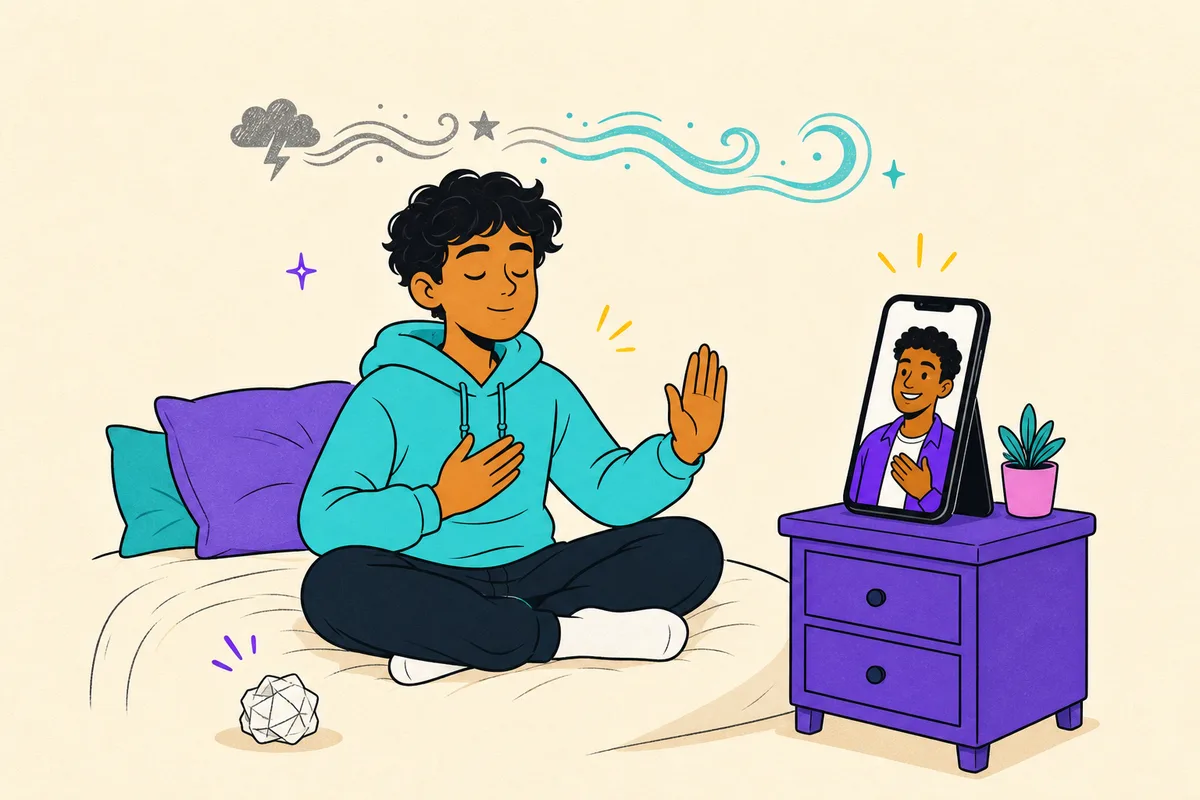
Nobody learns regulation mid-meltdown. The skill is built in calm moments: routines that lower the baseline load, plus small practiced responses (pause, name it, pick the next step) that become available under pressure because they've been rehearsed. A Coachbit coach meets the student by live video on their phone every weekday to land one small win on the habits that carry regulation, such as sleep, starting work early or a reset ritual. App tools support the plan throughout the day, and working with an adult who isn't the parent lowers the temperature.
Confidence coaching → · Teen sleep reset → · When your teen won't listen →
03 · Coaching, therapy, or both?
When to involve a clinician
Coaching is not therapy and Coachbit doesn't diagnose or treat any emotional, mood or behavioral condition. If the intensity feels beyond typical teen storms (aggression, self-harm talk, persistent low mood, or explosions that frighten the family), a licensed clinician is the right first step, promptly. Coaching is the habits-and-structure layer, and it works alongside clinical care, never instead of it. Coaching vs therapy, in full →
04 · What changes
Steadier, on purpose
- Week 1–2: sleep and morning routines start lowering the baseline load.
- Month 1: the reset ritual is rehearsed enough to show up under pressure.
- Month 2–3: the fuse is longer because the load is smaller, and everyone in the house can feel it.
10,000 +
families coached
4.8 /5
on Trustpilot
340 +
Trustpilot reviews
“My son was barely passing last year and now has As & Bs. This program is making a huge difference because it is every day for short periods of time.”
“No more missing assignments, all grades in the 90s, and getting to school is super easy with the new morning routine.”
“My son has transformed from a child who was scattered and overwhelmed to the first one ready to get out the door in the morning.”
“Out the blue, my daughter told me, I love coach Latia and it is working, I feel more organized!”
“[…] She motivated my daughter to stay more organized and practice strategies to stay on top of her work. […]”
“I wake up and find the kids up before me, clean bedrooms. […] they have a sense of ownership rather than because they were asked to.”
“Coachbit has been a game-changer for our son with ADHD. […] He's more organized, motivated, and confident. […]”
“[…] his grades improved from B's and C's to almost all A's! […] he has grown in to a calm, fairly confident college student with a plan to tackle life's daily challenges. […]”
FAQ
Questions parents ask
What is emotional regulation?
The skill of managing emotional responses: noticing the surge, pausing, naming it, and choosing the response rather than being driven to it. It develops through the mid-twenties and strengthens with practice, sleep and structure.
What are good emotional regulation activities for teens?
The unglamorous ones work best: consistent sleep, a predictable morning routine, starting schoolwork before it becomes dread, a rehearsed reset (walk, water, three slow breaths), and naming the feeling out loud. Daily repetition matters more than the specific technique.
Why does my teenager explode over small things?
When a teenager explodes over small things, the small thing usually landed on a big load (sleep debt, overdue work, social stress) that used up the regulation capacity first. Lowering that baseline load through habits usually shrinks the explosions more than addressing the trigger does.
When is it more than typical teen moodiness?
When intensity is persistent, frightening, involves self-harm talk, or spreads across sleep, appetite and school avoidance, those signs belong with a licensed clinician promptly. Coaching supports habits and structure; clinicians provide care.
How does Coachbit help?
A consistent, calm coach meets the student by live video on their phone every weekday to build the habits that carry regulation: sleep, routines and starting work early. App tools support the plan throughout the day. One small win at a time, until steadier is normal. Ages 11–21.
How much does it cost?
Take the 2-minute quiz and we'll show plans for the student's situation. Many qualifying families use HSA/FSA funds, subject to their plan administrator. Coaching is covered by a 30-day money-back guarantee.
Steadier is buildable. One small win a day.
Take the 2-minute quiz, or book a call with our team. HSA/FSA may be available for qualifying accounts; 30-day money-back guarantee.