For middle schoolers, ages 11–14
Middle school is where the wheels wobble. Fix them early.
One teacher became seven. The backpack became a black hole. Middle school is an early, lower-stakes window to build self-management before high school raises the workload.


Why middle school hits hard
Middle school is the first time students must manage themselves (multiple teachers, rotating schedules, long-horizon assignments) while the brain's executive skills are still years from mature. That gap is why capable kids suddenly struggle in sixth or seventh grade. It's developmentally normal, and it's the single best window for executive function coaching: the habits built here are the ones high school will assume.
01 · The middle-school pattern
Sound like your sixth grader?
Seven teachers, zero systems
Elementary school managed them; nobody handed over the controls.
The planner they never open
Issued in September, pristine in June.
Homework amnesia
“No homework” nightly, followed by the missing-assignments email.
Young for the phone, old for the nagging
First device, first battles, and parent reminders already bouncing off.
02 · What coaching looks like at this age
Small habits, real coach, parent in the loop
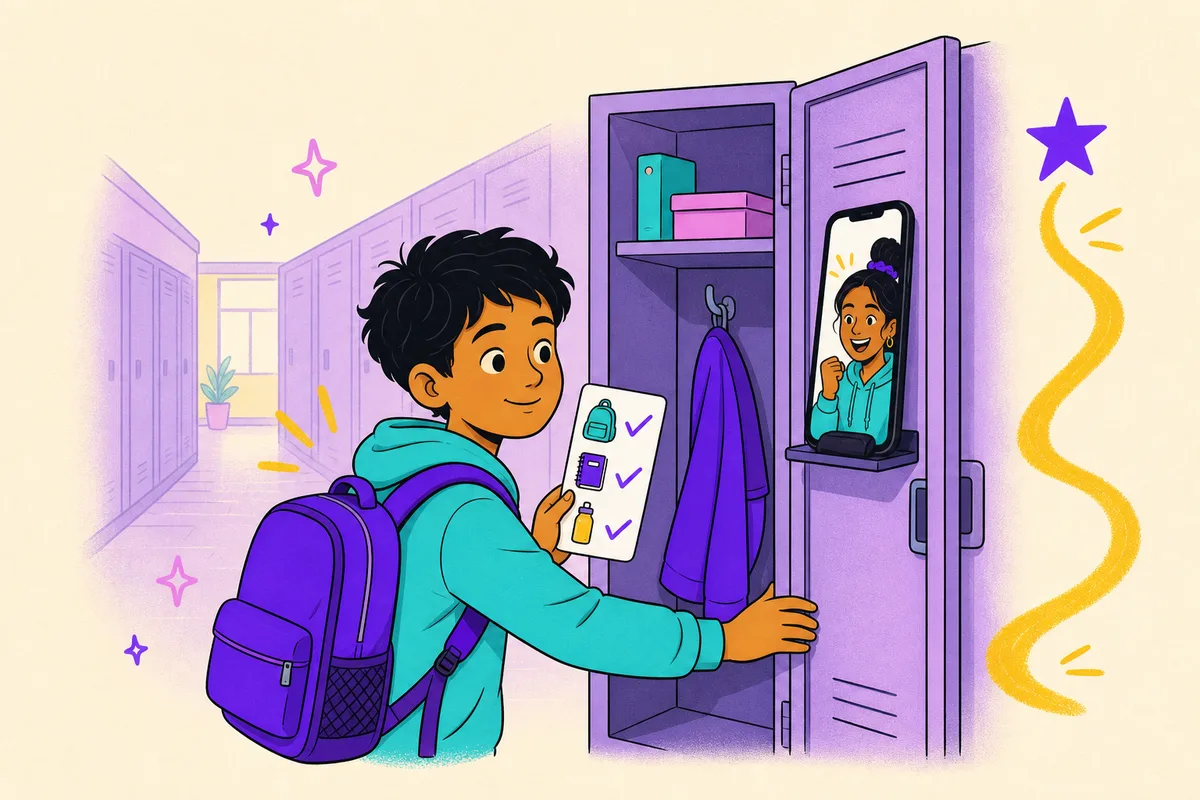
At 11–14, coaching is concrete and small: live video coaching each weekday lands one winnable habit (planner opened, backpack reset, homework started at four), while app tools keep the next step visible throughout the day. The coach makes self-management feel like leveling up, not another class. Parents stay closer in the loop at this age (weekly reports, visible goals), and the habits built now are the ones high school assumes on day one.
Homework coaching → · Organization systems → · High school next →
03 · Coaching, therapy, or both?
When to involve school or a clinician
Coaching is not therapy and Coachbit doesn't diagnose or provide medical care of any kind. Middle school is also when ADHD and learning-difference questions often first surface: those belong with a licensed clinician, and coaching runs alongside evaluation or care, never instead.
04 · What changes
Eighth grade ends. The habits don't.
- Weeks 1–2: one winnable habit lands daily; the planner gets opened because someone the student likes is asking.
- Month 2: capture, start time and reset run as a routine; the missing-assignments emails thin out.
- By high school: the jump is a step, not a cliff.
10,000 +
families coached
4.8 /5
on Trustpilot
340 +
Trustpilot reviews
“My son was barely passing last year and now has As & Bs. This program is making a huge difference because it is every day for short periods of time.”
“No more missing assignments, all grades in the 90s, and getting to school is super easy with the new morning routine.”
“My son has transformed from a child who was scattered and overwhelmed to the first one ready to get out the door in the morning.”
“Out the blue, my daughter told me, I love coach Latia and it is working, I feel more organized!”
“[…] She motivated my daughter to stay more organized and practice strategies to stay on top of her work. […]”
“I wake up and find the kids up before me, clean bedrooms. […] they have a sense of ownership rather than because they were asked to.”
“Coachbit has been a game-changer for our son with ADHD. […] He's more organized, motivated, and confident. […]”
“[…] his grades improved from B's and C's to almost all A's! […] he has grown in to a calm, fairly confident college student with a plan to tackle life's daily challenges. […]”
FAQ
Questions parents ask
Is my middle schooler too young for coaching?
Coachbit starts at 11 by design: middle school is when self-management is first demanded and when habits form most readily. Coaching at this age is smaller and more concrete, with parents closer in the loop.
Why is my child suddenly struggling in middle school?
The structure changed faster than the skills: multiple teachers, rotating schedules and long-horizon projects all assume executive skills that develop through the teen years. The struggle is a skills gap, not an ability change.
What habits matter most in middle school?
Three: capturing every assignment in one place, a fixed daily homework start, and a two-minute backpack/planner reset. Master those by eighth grade and high school's jump is a step, not a cliff.
How is coaching different for younger students?
Steps are smaller, wins are faster, gamification does more work, and the parent loop is tighter. The model is the same: Live video coaching on the student's phone every weekday, plus app tools throughout the day with a consistent coach.
How does Coachbit work?
A real coach meets the student by live video on their phone each weekday to land one small habit. App tools keep the habit visible throughout the day, and parents get weekly reports. Ages 11–21; this page is for ages 11–14.
How much does it cost?
Take the 2-minute quiz and we'll show plans for the student's situation. Many qualifying families use HSA/FSA funds, subject to their plan administrator. Coaching is covered by a 30-day money-back guarantee.
More from Coachbit
Build the habits now. High school will assume them.
Take the 2-minute quiz, or book a call with our team. HSA/FSA may be available for qualifying accounts; 30-day money-back guarantee.